Back to School Coloring Kdp for Kids
Building a consistent income stream on Amazon KDP requires more than just uploading any book. It demands a clear understanding of your niche, a reliable production process, and a product that meets a genuine need. The Back to School Coloring Kdp for Kids interior is one such product designed specifically for publishers who want to target the seasonal demand for educational and fun content. This article walks through what this interior offers, how it fits into a practical publishing workflow, and how you can integrate it into your existing KDP business without unnecessary complexity.
Understanding the Product and Its Place in Your Workflow
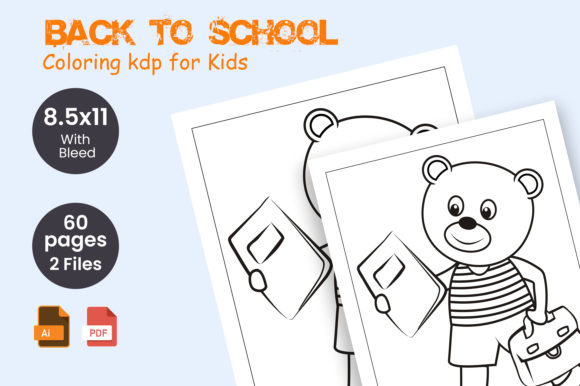
A KDP interior is essentially the content pages of a book, minus the cover. The Back to School Coloring Kdp for Kids interior provides 60 coloring pages aimed at children and toddlers, formatted as a digital printable book. It comes as a ready-to-upload PDF file, along with an AI file for those who want to make adjustments. The dimensions are 8.5″ x 11″ inches, with 120 pages total when you account for the bleed settings. For anyone running a high-content book business, this interior eliminates the need to design pages from scratch, freeing you to focus on cover creation, listing optimization, and marketing.
This product fits naturally at the beginning of your publishing workflow. Once you purchase the interior, your next steps involve adding a custom cover, ensuring the file meets Amazon’s specifications, and uploading it to KDP. The interior is already tested on the KDP platform, which removes much of the guesswork around formatting and bleed requirements. For publishers who produce multiple titles per season, having a pre-built interior like this allows you to scale output without sacrificing quality or consistency.
Where This Interior Fits Before, During, and After Your Project
Understanding how to integrate a product like Back to School Coloring Kdp for Kids into your broader process helps you avoid wasted time and rework. Consider where it lands in your typical book creation cycle.
Before Publishing: Preparation and Planning
Before you even open the file, take a moment to clarify your target audience. This interior is designed for children and toddlers, which means the coloring pages should be simple, appealing, and age-appropriate. The 60 pages give you enough content to fill a substantial book, but you need to decide whether you will sell it as a standalone title or bundle it with other volumes. Preparation also involves checking the file structure. The interior includes a PDF file ready for upload and an AI file if you want to edit elements like page order, add your own branding elements, or tweak the layout. If you plan to customize the interior further, working with the AI file before you create your cover will save time later.
Another pre-publication consideration is cover design. The instructions clearly state that you need to create your own cover. This is a deliberate aspect of the workflow: the interior is the foundation, and your cover is the marketing front. Plan your cover to match the back-to-school theme, using colors and imagery that appeal to both children and the parents making the purchase. Since the interior dimensions are 8.5″ x 11″, your cover must match that trim size and include the correct bleed area. Testing your cover against the interior PDF before upload prevents alignment issues later.
During Production: Integration and Assembly
When you move into the active production phase, the Back to School Coloring Kdp for Kids interior interacts directly with your design tools and KDP upload process. Start by opening the PDF to verify page count, bleed settings, and overall print readiness. The interior is described as having colored pages, which means each page includes color elements, not just black-and-white line art. This detail matters because it affects printing costs and the visual feel of the book. Ensure that the color usage aligns with your target price point and audience expectations.
If you are comfortable with Adobe Illustrator, open the AI file to examine the layers and structure. You might want to add a copyright page, a “this book belongs to” page, or other front matter. Because the interior is already built with bleed, any edits you make should maintain that bleed margin. Keep a checklist of what you add so that you don’t accidentally introduce formatting errors. Once your interior file is final, test it by uploading a draft to KDP and using the online previewer. This step catches issues like missing fonts, misaligned pages, or incorrect color profiles before you hit publish.
After Launch: Quality Control and Iteration
After your book is live, the interior continues to play a role in your business workflow. Monitor customer reviews and feedback specifically about page quality, design appeal, and whether the content matches the description. If buyers mention that pages are too complex for toddlers or that the color reproduction looks different from expected, you can return to the AI file to make adjustments for a second edition. The availability of both PDF and AI file formats makes this iteration process straightforward. You are not locked into a single static file; you can evolve the product based on real-world use.
Long-term, you can repurpose this interior across multiple listings by changing the cover, adjusting the title, or bundling it with other back-to-school themed books. Each iteration builds on the same core content, saving you design time while expanding your catalog. This approach works well for publishers who want to test different cover styles or pricing strategies without recreating the interior from scratch.
Practical Implementation Tips for a Smooth Workflow
Integrating a pre-built KDP interior into your process should feel like a shortcut, not a detour. Here are actionable ways to make the Back to School Coloring Kdp for Kids interior work efficiently within your existing routine.
- Organize your files immediately. When you download the package, create a dedicated folder for this book project. Store the PDF, AI file, and any cover drafts together. Name the files clearly so you can locate them quickly during upload.
- Use the AI file for custom touches. Even if you plan to use the PDF as-is, open the AI file to check that all elements are correctly placed. You can add a simple credits page or adjust the order of the coloring pages to create a logical flow from easier to more detailed designs.
- Match your cover to the interior theme. Since the interior focuses on back-to-school imagery, your cover should reflect that directly. Avoid generic covers that don’t signal the seasonal or educational angle. Parents searching for back-to-school activities are more likely to click on a cover that clearly shows school supplies, classroom scenes, or playful learning motifs.
- Test the bleed thoroughly. The interior is designed with bleed at 8.5″ x 11″, which means content extends slightly beyond the trim edge. Before uploading, use KDP’s preview tool to confirm that no important elements are cut off. If you edited the AI file, double-check that your changes also extend into the bleed area.
- Set realistic pricing based on page count. With 120 pages including bleed, your printing cost will be higher than a slim activity book. Factor that into your royalty calculation. The 60 coloring pages provide good value, but price competitively against similar back-to-school coloring books in your niche.
Factors That Affect Usability and Long-Term Value
Not all KDP interiors are created equal. The quality of your experience depends on several practical factors that you should evaluate before and during use.
Compatibility with KDP Requirements
The interior is described as fully tested on the Amazon KDP platform and ready to list with bleed. This is a significant time-saver because formatting errors are one of the most common reasons for upload rejections or printing issues. However, compatibility also depends on your own software and workflow. The PDF file should open correctly in standard PDF readers, and the AI file requires Adobe Illustrator or a compatible vector editor. If you use alternative design software, verify that the AI file imports cleanly before relying on it for edits.
Efficiency in Production
For publishers managing multiple titles, efficiency matters. This interior reduces your production time because you skip the design phase entirely. Your main tasks become cover creation, file preparation, and listing optimization. If you produce a series of back-to-school books, you can use this interior as a template for additional volumes by swapping out cover designs and adjusting the title. The consistent page count and format mean you don’t need to recalculate print costs or bleed margins for each new book.
Consistency Across Your Catalog
Using a standardized interior format helps maintain visual and structural consistency across your products. When customers purchase multiple books from your brand, they expect a similar quality and layout. This interior’s 8.5″ x 11″ trim size and 60-page count give you a repeatable format that customers can recognize. Consistency also makes it easier to batch-produce covers and listings, since you know the exact specs from the start.
Quality Control Checks
Even though the interior is pre-built, you should still conduct your own quality checks. Print a sample page at home or use a print-on-demand proof to see how the colors reproduce. Check that the line art is crisp and that the coloring areas are suitable for young children. If you notice any issues, you have the AI file to make corrections. Quality control doesn’t stop at launch; revisit your listing after a few months to see if customer feedback suggests any improvements.
Long-Term Use and Scaling Your KDP Business
A single interior can serve multiple purposes over time. Beyond the initial back-to-school season, you might find that the pages work for general educational coloring books or as part of a bundle with other seasonal titles. The file formats give you flexibility to repurpose content without starting from zero. As your business grows, you can use interiors like this one to test new niches or audiences with minimal risk. If a particular cover design or pricing strategy performs well, you can replicate that approach with other interiors from the same creator.
Scaling also involves building a library of reliable interiors. When you find a product that consistently delivers good results, note the file structure, page count, and format so you can source similar products from the same provider. This reduces the learning curve for each new project. The Back to School Coloring Kdp for Kids interior fits into a repeatable workflow that prioritizes speed, quality, and customer satisfaction.
Final Observations on Integration
Adding a pre-built KDP interior to your publishing process is a practical decision that can streamline your operations, provided you treat it as part of a larger system. This interior gives you a solid foundation of 60 coloring pages with tested bleed and formatting. Your job is to surround it with a compelling cover, accurate metadata, and a clear understanding of your target audience. The real value lies not in the pages themselves, but in how efficiently you can move from download to live listing. By focusing on the workflow steps that matter—preparation, integration, quality control, and iteration—you turn a simple product into a consistent component of your creative business.
Whether you are new to KDP or a seasoned publisher, the key is to reduce friction at every stage. This interior removes the friction of page creation. Your focus can then shift to cover design, listing optimization, and customer engagement. Over multiple projects, that shift in focus adds up to significant time savings and a more sustainable publishing rhythm.